Politics.be Registreren kan je hier.
Problemen met registreren of reageren op de berichten?
Een verloren wachtwoord?
Gelieve een mail te zenden naar [email protected] met vermelding van je gebruikersnaam.

Ga terug   Politics.be > Themafora > Godsdienst en levensovertuiging
Registreer FAQForumreglement Ledenlijst

Godsdienst en levensovertuiging In dit forum kan je discussiëren over diverse godsdiensten en levensovertuigingen.

Antwoord
 
Discussietools
Oud 8 september 2006, 10:53   #341
Kaffer
Banneling
 
 
Kaffer's schermafbeelding
 
Geregistreerd: 3 september 2006
Locatie: Assenede
Berichten: 2.998
Standaard

Citaat:
Oorspronkelijk geplaatst door Apocalyps Bekijk bericht
Even that is too late...
1= 0, 987 , dat is wat de evolutietherie zit te bewijzen ,
En nog ene , citroenen zijn chinezen want ze zijn geel en ze lachen zuur .
Wetenschappelijke waarschijnlijkheid dat die stelling klopt : 99% .
Kaffer is offline   Met citaat antwoorden
Oud 8 september 2006, 10:58   #342
Amon_Re
Perm. Vertegenwoordiger VN
 
Amon_Re's schermafbeelding
 
Geregistreerd: 7 februari 2006
Berichten: 19.121
Standaard

Citaat:
Oorspronkelijk geplaatst door Kaffer Bekijk bericht
Ik denk dat de evolutietheorie hier al serieus gefalsificieerd is met feiten , dus weg het woord wetenschap , leve de feiten , leve de evolutie , en ik ben dus weer echt geestig vandaag .
Welke feiten? Uw gebrek aan inzicht in de theorie?
__________________
Citaat:
Oorspronkelijk geplaatst door lamenielachen Bekijk bericht
politiek België lijkt meer op een inktvis met veel grabbelende armen in de staatskas en inkt spuitend omdat niemand het zou zien.
Stephen F. Roberts: "...I contend that we are both atheists. I just believe in one fewer god than you do. When you understand why you dismiss all the other possible gods, you will understand why I dismiss yours."
Amon_Re is offline   Met citaat antwoorden
Oud 8 september 2006, 10:59   #343
genehunter
Gouverneur
 
genehunter's schermafbeelding
 
Geregistreerd: 21 maart 2005
Berichten: 1.088
Standaard

Citaat:
Maar er zijn veel zaken die neit wetenschappelijk kunnen verklaard worden.
Je stelt dat al a priori. Je kunt toch hoegenaamd niet weten hoever de wetenschap staat binnen 200 jaar? Heel veel zaken die in het verleden onverklaarbaar verklaard werden, zijn intussentijd opgehelderd, door wetenschap.

Hadden Galilei of Keppler ooit kunnen voorspellen dat de mens ooit sondes naar Mars zou sturen? Kijk naar de tijdsgeest. Had Vesalius ooit kunnen dromen van een CT scan om kankergezwellen te lokaliseren? De pest is jarenlang beschouwd als straf van God, onverklaarbaar en dodelijk, de wetenschap heeft Yersinia pestis kunnen aanduiden als oorzaak, zonder God, zonder bijgeloof of nood aan etherische of spirituele zever. Kijk naar een helikopter. Laat die landen in de jaren 500 nC op een marktplein en laat een hologram van karakters uit Dante's inferno projecteren gevolgd door een atoomexplosie de dag erop, wat denk je dat ze dan gaan zeggen in de naburige steden? Dat alle demonen uit de onderwereld zijn neergedaald. Dat de apocalyps is ingezet.

Donder en bliksem als de toorn der goden zijn vervangen door bijna dood ervaringen. So what? Je kunt je blijven wentelen in van die zielige redeneringen.

Citaat:
The universe is cold and lonely, be a man, and face the lack of an objective meaning of life, fill in your own destinity, but be honest with yourself.
Komaan, hou er mee op, wees een man!

Laatst gewijzigd door genehunter : 8 september 2006 om 11:04.
genehunter is offline   Met citaat antwoorden
Oud 8 september 2006, 11:00   #344
Amon_Re
Perm. Vertegenwoordiger VN
 
Amon_Re's schermafbeelding
 
Geregistreerd: 7 februari 2006
Berichten: 19.121
Standaard

Citaat:
Oorspronkelijk geplaatst door Kaffer Bekijk bericht
Zegt die Gerard Bodifee dat werkelijk in het nieuwsblad ( zou me niet verbazen , want het is ook niet de slimste gazet ) , dat volgens het creatonisme de wereld maar 6.000 jaar zou bestaan .
Volgens het Creationisme bestaat, niet de wereld , wel de mens een slordige 6.000 jaar .
Volgens de meest recente Bijbeltellingen bestaat de mens 80.000 jaar , dus wat Gerard Bodifee hiermee te maken heeft heeft is nogal irrelevant , maar het ging dan ook over een artikel uit het nieuwsblad .
Er is effectief een strekking, 'jong creationisme' die zegt dat de wereld maar 6000 jaar is.
__________________
Citaat:
Oorspronkelijk geplaatst door lamenielachen Bekijk bericht
politiek België lijkt meer op een inktvis met veel grabbelende armen in de staatskas en inkt spuitend omdat niemand het zou zien.
Stephen F. Roberts: "...I contend that we are both atheists. I just believe in one fewer god than you do. When you understand why you dismiss all the other possible gods, you will understand why I dismiss yours."
Amon_Re is offline   Met citaat antwoorden
Oud 8 september 2006, 11:12   #345
Kaffer
Banneling
 
 
Kaffer's schermafbeelding
 
Geregistreerd: 3 september 2006
Locatie: Assenede
Berichten: 2.998
Standaard

Citaat:
Oorspronkelijk geplaatst door Amon_Re Bekijk bericht
Er is effectief een strekking, 'jong creationisme' die zegt dat de wereld maar 6000 jaar is.
Het ging dan ook over het nieuwsblad .
Waarom willen jullie nogmaals per sé geloven dat die evolutieheorie klopt .
De evolutietheorie kan geen enkele toetsing met de wetenschappelijke realiteit doorstaan .
Het is telkens : net niet , dus géén wetenschap .
Kaffer is offline   Met citaat antwoorden
Oud 8 september 2006, 11:35   #346
Pindar
Banneling
 
 
Pindar's schermafbeelding
 
Geregistreerd: 1 juni 2005
Berichten: 8.258
Standaard

Tsja,
Citaat:
Darwinism -- The forbidden subject

It isn't scientific investigation of Darwinism that's forbidden -- it's public debate of the findings of such research.
Most educated, rational people will find it almost impossible to believe that the debate of Darwinism through mainstream news papers and the principal TV channels is forbidden. I still find it hard to believe myself.

The article below was first commissioned and later censored by the Times Higher Education Supplement. (The circumstances under which it came to be censored, following the intervention of Dr Richard Dawkins, are described in the pages on Scientific Censorship).

The readers of the Times Higher Education Supplement (a large proportion of the University lecturers of Britain) have thus been prevented from learning of its contents. Now you have the facts before you and can make up your own mind.


Neo-Darwinism: time to reconsider

It was the dazzling gains made by science and technology in the nineteenth century through the application of rational analysis that led people to think of applying reason to other fields.

Following the brilliant success of reason and method in physics and chemistry -- especially in medicine -- it was natural for science to seek to apply the same analytical tool to the most intractable and complex problems: human society and economic affairs; human psychology; and even the origin and development of life itself. The result was the great mechanistic philosophies of the last century: Marxism, Freudianism and Darwinism.

The simplicities and certainties of these systems mirrored the intellectually well-ordered life of Victorian society with its authoritarian values and institutionalised prejudices. Now, a century later, all three systems have run their course, have been measured by history, and have been ultimately found to be inadequate tools of explanation.

Unlike Marx and Freud, Darwin himself remains esteemed both as a highly original thinker and as a careful researcher (his study of fossil barnacles remains a text book example for palaeontologists). But the theory that bears his name was transformed in the early years of this century into the mechanistic, reductionist theory of neo-Darwinism: the theory that living creatures are machines whose only goal is genetic replication -- a matter of chemistry and statistics; or, in the words of professor Jacques Monod, director of the Pasteur Institute, a matter only of "chance and necessity". 1

And while the evidence for evolution itself remains persuasive -- especially the homologies that are found in comparative anatomy and molecular biology of many different species -- much of the empirical evidence that was formerly believed to support the neo-Darwinian mechanism of chance mutation coupled with natural selection has melted away like snow on a spring morning, through better observation and more careful analysis.Marxist, Freudian and neo-Darwinist systems of thought ultimately failed for the same reason; that they sought to use mechanistic reductionism to explain and predict systems that we now know are complexity-related, and cannot be explained as the sum of their parts.

In the case of neo-Darwinism, it was not the mysteries of the mind or of the economy that were explained. It was the origin of the first single-celled organism in the primeval oceans, and its development into the plant and animal kingdoms of today by a strictly blind process of chance genetic mutation working with natural selection.

In the first five decades of this century -- the heyday of the theory -- zoologists, palaeontologists and comparative anatomists assembled the impressive exhibits that generations of school children have seen in Natural History Museums the world over: the evolution of the horse family; the fossils that illustrate the transition from fish to amphibian to reptile to mammal; and the discovery of astonishing extinct species such as "Archaeopteryx", apparently half-reptile, half-bird.

Over successive decades, these exhibits have been first disputed, then downgraded, and finally shunted off to obscure museum basements, as further research has shown them to be flawed or misconceived.

Anyone educated in a western country in the last forty years will recall being shown a chart of the evolution of the horse from "Eohippus", a small dog-like creature in the Eocene period 50 million years ago, to "Mesohippus", a sheep-sized animal of 30 million years ago, eventually to "Dinohippus", the size of a Shetland pony.

This chart was drawn in 1950 by Harvard's professor of palaeontology George Simpson, to accompany his standard text book, Horses, which encapsulated all the research done by the American Museum of Natural History in the previous half century.

Simpson plainly believed that his evidence was incontrovertible because he wrote, 'The history of the horse family is still one of the clearest and most convincing for showing that organisms really have evolved. . . There really is no point nowadays in continuing to collect and to study fossils simply to determine whether or not evolution is a fact. The question has been decisively answered in the affirmative.' 2

Yet shortly after this affirmation, Simpson admits in passing that the chart he has drawn contains major gaps that he has not included: a gap before "Eohippus" and its unknown ancestors, for example, and another gap after "Eohippus" and before its supposed descendant "Mesohippus". 3 What is it, scientifically, that connects these isolated species on the famous chart if it is not fossil remains? And how could such unconnected examples demonstrate either genetic mutation or natural selection?

Even though, today, the bones themselves have been relegated to the basement, the famous chart with its unproven continuity still appears in museum displays and handbooks, text books, encyclopaedias and lectures.

The remarkable "Archaeopteryx" also seems at first glance to bear out the neo-Darwinian concept of birds having evolved from small reptiles (the candidate most favoured by neo-Darwinists is a small agile dinosaur called a Coelosaur, and this is the explanation offered by most text books and museums.) Actually, such a descent is impossible because coelosaurs, in common with most other dinosaurs, did not posses collar bones while "Archaeopteryx", like all birds, has a modified collar bone to support its pectoral muscles.4 Again, how can an isolated fossil, however remarkable, provide evidence of beneficial mutation or natural selection?

Neo-Darwinists were quick to claim that modern discoveries of molecular biology supported their theory. They said, for example, that if you analyse the DNA, the genetic blueprint, of plants and animals you find how closely or distantly they are related. That studying DNA sequences enables you to draw up the precise family tree of all living things and show how they are related by common ancestry.

This is a very important claim and central to the theory. If true, it would mean that animals neo-Darwinists say are closely related, such as two reptiles, would have greater similarity in their DNA than animals that are not so closely related, such as a reptile and a bird.

Fifteen years ago molecular biologists working under Dr Morris Goodman at Michigan University decided to test this hypothesis. They took the alpha haemoglobin DNA of two reptiles -- a snake and a crocodile -- which are said by Darwinists to be closely related, and the haemoglobin DNA of a bird, in this case a farmyard chicken.

They found that the two animals who had _least_ DNA sequences in common were the two reptiles, the snake and the crocodile. They had only around 5% of DNA sequences in common -- only one twentieth of their haemoglobin DNA. The two creatures whose DNA was closest were the crocodile and the chicken, where there were 17.5% of sequences in common -- nearly one fifth. The actual DNA similarities were the _reverse_ of that predicted by neo-Darwinism. 5

Even more baffling is the fact that radically different genetic coding can give rise to animals that look outwardly very similar and exhibit similar behaviour, while creatures that look and behave completely differently can have much in common genetically. There are, for instance, more than 3,000 species of frogs, all of which look superficially the same. But there is a greater variation of DNA between them than there is between the bat and the blue whale.

Further, if neo-Darwinist evolutionary ideas of gradual genetic change were true, then one would expect to find that simple organisms have simple DNA and complex organisms have complex DNA.

In some cases, this is true. The simple nematode worm is a favourite subject of laboratory study because its DNA contains a mere 100,000 nucleotide bases. At the other end of the complexity scale, humans have 23 chromosomes which in total contain 3,000 million nucleotide bases.

Unfortunately, this promisingly Darwinian progression is contradicted by many counter examples. While human DNA is contained in 23 pairs of chromosomes, the humble goldfish has more than twice as many, at 47. The even humbler garden snail -- not much more than a glob of slime in a shell -- has 27 chromosomes. Some species of rose bush have 56 chromosomes.

So the simple fact is that DNA analysis does _not_ confirm neo-Darwinist theory. In the laboratory, DNA analysis falsifies neo-Darwinist theory.

An even more damaging blow to the theory was the discovery that the very centrepiece of neo-Darwinism, Darwin's original conception of natural selection, or the survival of the fittest, is fatally flawed.

The problem is: how can biologists (or anyone else) tell what characteristics constitute the animal or plant's 'fitness' to survive? How can you tell which are the fit animals and plants?

The answer is that the only way to define the fit is by means of a post-hoc rationalisation -- the fit must be "those who survived". While the only way to characterise uniquely those who survive is as "the fit". The central proposition of the Darwinian argument turns out to be an empty tautology.

C.H. Waddington, professor of biology at Edinburgh University wrote; "Natural selection, which was at first considered as though it were a hypothesis that was in need of experimental or observational confirmation, turns out on closer inspection to be a tautology, a statement of an inevitable although previously unrecognised relation. It states that the fittest individuals in a population (defined as those who leave the most offspring) will leave most offspring. Once the statement is made, its truth is
apparent." 6

George Simpson, professor of paleontology at Harvard, sought to restore content to the idea of natural selection by saying; "If genetically red-haired parents have, on average, a larger proportion of children than blondes or brunettes, then evolution will be in the direction of red hair. If genetically left-handed people have more children, evolution will be towards left-handedness. The characteristics themselves do not directly matter at all. All that matters is who leaves more descendants over the generations. Natural selection favours fitness only if you define fitness as leaving more descendants. In fact geneticists do define it that way, which maybe confusing to others. To a geneticist, fitness has nothing to do with health, strength, good looks, or anything but effectiveness in breeding." 7

Notice the words; "The characteristics themselves do not directly matter at all." This innocent phrase fatally undermines Darwin's original key conception: that each animal's special physical characteristics are what makes it fit to survive: the giraffe's long neck, the eagle's keen eye, or the cheetah's 60 mile-an-hour sprint.

Simpson's reformulation means all this must be dropped: it is not the characteristics that directly matter -- it is the animals' capacity to reproduce themselves. The race is not to the swift, after all, but merely to the prolific. So how can neo-Darwinism explain the enormous diversity of characteristics?

Not only are neo-Darwinist ideas falsified by empirical research, but other puzzling and extraordinary findings have come to light in recent decades, suggesting that evolution is not blind but rather is in some unknown way _directed_. The experiments of Cairns at Harvard and Hall at Rochester University suggest that microorganisms can mutate in a way that is beneficial.8

Experiments with tobacco plants and flax demonstrate genetic change through the effects of fertilisers alone.9 Experiments with sea squirts and salamanders as long ago as the 1920s appeared to demonstrate the inheritance of acquired characteristics.10 Moreover, as Sir Fred Hoyle has pointed out, Fossil micro-organisms have been found in meteorites, indicating that life is universal -- not a lucky break in the primeval soup. This view is shared by Sir Francis Crick, co-discoverer of the function of DNA.11

In the light of discoveries of this kind, the received wisdom of neo-Darwinism is no longer received so uncritically. A new generation of biologists is subjecting the theory to the cold light of empirical investigation and finding it inadequate; scientists like Dr Rupert Sheldrake, Dr Brian Goodwin, professor of biology at the Open University and Dr Peter Saunders, professor of mathematics at King's College London.

Not surprisingly, the work of this new generation is heresy to the old. When Rupert Sheldrake's book A New Science of Life with its revolutionary theory of morphic resonance was published in 1981, the editor of "Nature" magazine, John Maddox, ran an editorial calling for the book to be burned -- a sure sign that Sheldrake is onto something important, many will think. 12, 13

The current mood in biology was summed up recently by Sheldrake as, 'Rather like working in Russia under Brehznev. Many biologists have one set of beliefs at work, their official beliefs, and another set, their real beliefs, which they can speak openly about only among friends. They may treat living things as mechanical in the laboratory but when they go home they don't treat their families as inanimate machines.'

It is a strange aspect of science in the twentieth century that while physics has had to submit to the indignity of a principle of uncertainty and physicists have become accustomed to such strange entities as matter-waves and virtual particles, many of their colleagues down the corridor in biology seem not to have noticed the revolution of quantum electrodynamics. As far as many biologists are concerned, matter is made of billiard balls which collide with Newtonian certainty, and they carry on building molecular models out of coloured ping-pong balls.

One of the twentieth century's most distinguished scientists and Nobel laureates, physicist Max Planck, observed that; 'A new scientific truth does not triumph by convincing its opponents and making them see the light, but rather because its opponents eventually die, and a new generation grows up that is familiar with it.'
It may be another decade or more before such a new generation grows up and restores intellectual rigour to the study of evolutionary biology.
http://www.alternativescience.com/darwinism.htm


Nuff said

Pin d'Ar
Pindar is offline   Met citaat antwoorden
Oud 8 september 2006, 11:36   #347
Pindar
Banneling
 
 
Pindar's schermafbeelding
 
Geregistreerd: 1 juni 2005
Berichten: 8.258
Standaard

Citaat:
Darwin doesn't work here any more


Richard Milton spent some twenty years studying the geology and palaeontology of the British Isles before writing Shattering the Myths of Darwinism.

"It was the absence of transitional fossils that first made me question Darwin's idea of gradual change. I realised, too, that the procedures used to date rocks were circular. Rocks are used to date fossils: fossils are used to date rocks. From here I began to think the unthinkable: could Darwinism be scientifically flawed?"

"I became an almost daily visitor at the Natural History Museum, looking more closely again at all the famous evidence I had been taught about: the evolution of horses, Archaeopteryx -- half-reptile, half-bird -- the peppered moth, the Galapagos finches and all the other totems of Darwinism."

"One after another they crumbled as I subjected them to even routine journalistic scrutiny. At first I thought I must be mistaken -- then I began to discover one by one the many scientists around the world who had already realised the emperor has no clothes, but who cannot speak out without jeopardising their careers and even their jobs."

"At this point my long years as a journalist took over and I started turning over stone after stone and making one amazing discovery after another. In fact, all the scientific work to show that Darwinism doesn't really work had already been done. Plenty of people with a religious agenda had tried to to overturn the theory. But no-one had put it all together before from a purely scientific standpoint."

"As a science journalist and writer with a lifelong passion for geology and palaeontology -- and no religious beliefs to get in the way -- I was in a unique position to investigate and report on the state of Darwin's theory in the 1990s. The result was unambiguous. Darwin doesn't work here any more."


Pin d'Ar

Laatst gewijzigd door Pindar : 8 september 2006 om 11:38.
Pindar is offline   Met citaat antwoorden
Oud 8 september 2006, 11:39   #348
Pindar
Banneling
 
 
Pindar's schermafbeelding
 
Geregistreerd: 1 juni 2005
Berichten: 8.258
Standaard

Citaat:
Shattering the Myths of Darwinism - Contents


Preface

Part One: Chaos

Chapter 1. A National Treasure

Darwinism is the only theory of origins taught in schools and universities worldwide. Yet although science can demonstrate conclusively the circulation of the blood, or the expanding universe, or the value of physical constants, science has so far been unable to produce any direct evidence for evolution by genetic mutation and natural selection. The theory is revered, but remains conjectural.

Chapter 2. Through the Looking Glass

The past two decades have seen many new research findings in every one of the complex interlocking set of disciplines that go to make up the Darwinian theory: findings that undermine and challenge many fundamental tenets on which the theory is constructed. These include tenets as elementary as the age of the Earth, the formation of sedimentary rocks and the formation of the main features of the Earth's crust, the limits to specific variation, the causes of extinctions, and even the possible origins of life - long considered settled in broad outline. Yet these new findings have been given short shrift by the ruling ideology of the life sciences.

Chapter 3. A Matter of Conjecture

Most people -- including most teachers -- have been led to believe that the rocks of the geological column and the fossils they contain have been dated absolutely by radiometric methods. In reality, none of these rocks or fossils can be dated by radiometric methods and their assigned dates are estimates -- based on Darwinian conjectures.

Chapter 4. The Key to the Past?

Radiocarbon assay has been found to be flawed and unreliable. In one recent case, South African 'bushman paintings' dated as 1,200 years old by Oxford University's carbon accelerator were found to have been painted at evening classes by a Johannesburg housewife.


Chapter 5. Rock of Ages

All radiometric methods of dating have been found to be deeply flawed. Uranium-lead, potassium-argon and rubidium-strontium have all been found to give wildly inaccurate dates. Dating scientists get around this unreliability by selecting 'suitable' rocks to date and rejecting 'unsuitable' rocks, their suitability being judged by Darwinian criteria.

Part Two: Clay

Chapter 6. Tales from Before the Flood

Can sedimentary rocks be formed rapidly, or are millions of years necessary? A major sedimentary formation excavated in Sumeria was caused by a flood in historical times.

Chapter 7. Fashioned from Clay

According to the ruling ideology of Uniformitarian geology, "The Present is the Key to the Past". Yet careful analysis of the rocks of the geological column shows that nowhere in the world today are there rocks forming that are anything like the historical rocks of the Earth's crust. In reality, the present entirely fails as a key to the past. Moreover, recent experiments in France and the US have shown that stratified rocks can form rapidly and simultaneously -- not over millions of years.

Chapter 8. An Element of Unreality

There is conclusive evidence that coal beds forty or more feet in thickness can form rapidly, not over millions of years. If coal can form rapidly, why not other sedimentary rocks?

Chapter 9. When Worlds Collide

The idea of catastrophism -- rapid formation of rocks -- is anathema to conventional geology. Yet there is mounting evidence for catastrophic processes. Examples include the young age and rapid building of the world's mountain chains in historical times; the gigantic extent of certain rock formations, requiring singular, acute causes; and the occurrence of extinctions on a massive scale of terrestrial -- not marine -- creatures.

Chapter 10. The Record of the Rocks

If Darwinian processes of gradual evolutionary change had taken place the rocks of the Earth's crust would contain fossil evidence of such processes. The rocks should contain sequences of fossils from adjacent strata showing indisputable signs of gradual progressive change.

But this is not what is shown in the sequence of the rocks. Nowhere in the world has anyone met this simple evidential criterion with a straightforward fossil sequence from successive strata. Yet there are so many billions of fossils available from so many thousands of strata, that the failure to meet this modest demand is inexplicable if evolution has taken place in the way Darwin and his followers have envisaged. It ought to be relatively easy to assemble not merely a handful but hundreds of species arranged in lineal descent. Schoolchildren should be able to do this on an afternoon's nature study trip to the local quarry: but even the world's foremost paleontologists have failed to do so with the whole Earth to choose from and the resources of the world's greatest universities at their disposal.

Part Three: Chance

Chapter 11. Survival of the Fittest

Although universally taught and widely accepted, the concept of 'natural selection' or 'the survival of the fittest' is no more than an empty tautology, incapable of explaining the origin of species. Experimental evidence formerly accepted in support of the concept, such as industrial melanism in moths, is now regarded as irrelevant to evolutionary biology.

An even more damaging criticism of the concept of natural selection is that - limited though its content may be - it is so nebulous that it can be made to fit a whole range of mutually contradictory outcomes of the evolutionary process.

As a theory, natural selection makes no unique predictions but instead is used retrospectively to explain every outcome: and a theory that explains everything in this way, explains nothing. Natural selection is not a mechanism: it is a rationalization after the fact.

Chapter 12. Green Mice and Blue Genes

In the first edition of On the Origin of Species Darwin said; 'I can see no difficulty in a race of bears being rendered, by natural selection, more and more aquatic in their habits, with larger and larger mouths, till a creature was produced as monstrous as a whale.'

This is Darwin's central idea of evolution in a nutshell: bears can become whales, or whale-like, given enough time and enough natural selection. However Darwin withdrew this claim from the second and later editions of the book.

Almost certainly this was because as an animal breeder he knew from first hand experience that no plant or animal breeder has ever succeeded in producing a new species by selective breeding. Primarily this is because of what Harvard's Ernst Mayr called "genetic homeostasis" -- the barrier beyond which selective breeding will not pass because of the onset of sterility or exhaustion of genetic variability.

Chapter 13. The Beak of the Finch

Writer Jonathan Wiener has claimed that Darwin's finches on the Galapagos Islands represent an example of "Evolution in real time" and his book, the "Beak of the Finch" has been instrumental in confirming many people's belief in Darwinian processes of genetic mutation and natural selection.

Yet this interpretation of the data on Darwin's Finches is categorically contradicted by clear evidence that all the 13 "species" of ground finch on the island are in fact members of the same species who breed fertile offspring and who differ merely in diet and beak shape.

Darwinist make many claims of observed speciation. These claims vanish when examined closely and are seen as no more than pseudo- speciation. In some cases, it is merely subspecific variation being passed off as speciation. In others it is cases of freak degenerative mutations which play no evolutionary role.

Chapter 14. Of Cabbages and Kings

The only mechanism in neoDarwinism for introducing novelty of form is genetic mutation. Yet advantageous or beneficial spontaneous genetic mutation remains no more than a hypothetical necessity to the neo-Darwinist theory.

No one has ever observed a spontaneous inheritable genetic mutation that resulted in a changed physical characteristic, aside, that is, from a small group of well-known and usually fatal genetic defects. Because noone has ever observed such an event, noone really knows whether they occur at all and, if so, how often. Because deleterious mutations are known to occur, Darwinists appeal to the statistics of large numbers. If deleterious mutations can occur, then given enough time beneficial mutations must occur.

This fundamental part of the neoDarwinist theory remains unsupported by evidence or experiment.

Chapter 15. The Ghost in the Machine

Computers have been used apparently to simulate the evolution of "insect" like graphics images ("biomorphs") through Darwinian processes of mutation and natural selection.

Yet such programs are not a true representation of random mutation coupled with natural selection. On the contrary they are dependent on artificial selection in which the operator controls the rate of occurrence of mutations.

It is the operator who chooses which are the lucky individuals to receive the next mutation - it is not decided by fate - and of course it is the most promising ones who are chosen. That is why they end up looking like recognizable images from the operator's memory.

Above all, such computer experiments falsify the most important central claim of mechanistic Darwinian thinking; that, through natural processes, living things could come into being without any precursor.

Part Four: Creation

Chapter 16. Pandora's Box

By far the strongest primary evidence for evolution, for common descent and for Darwinian processes of mutation and natural selection, is that of homology -- the name given to the anatomical correspondences between different species that biologists and paleontologists have noted and studied for centuries.

Darwin observed; 'What can be more curious than that the hand of a man, formed for grasping, that of a mole for digging, the leg of the horse, the paddle of the porpoise, and the wing of the bat should all be constructed on the same pattern and should include similar bones in the same relative position?'

This classic case of homology - the forelimbs in vertebrates - turns out in fact to be flawed, since forelimbs develop from different body segments in different species. In the newt, the forelimbs develop from trunk segments 2,3,4 and 5; in the lizard from segments 6,7,8 and 9; and in humans from segments 13,14,15,16,17 and 18.

Similarly, there are many other cases both from embryology and from molecular biology which show that homology is largely an illusion that is not maintained at the embryological level or the molecular level. Different genes are responsible in different species for specifying the same anatomical features.

Chapter 17. Paradigm Lost

Darwinism became buttressed at an early stage by a powerful array of supporting evidence, held to confirm its basic principles, but which in fact represented nothing more than the assumptions of the ruling ideology of Darwin's era. These assumptions concerned a broad range of minutely described natural phenomena, such as the persistence of vestigial organs in the human body, left behind by evolution, and the recapitulation of former evolutionary stages by embryos.

Encyclopaedia Britannica currently cites 'more than 100' organs of the human body which are supposed to have lost their function, and to be mere appendages which time and further evolution will no doubt dispel entirely from the human frame. The list includes organs such as the pineal gland, the thyroid gland, the thymus, the coccyx, the appendix, the ear muscles and the tonsils. Modern scientific examination of these claims shows that they are based simply on ignorance of the function of the organs concerned.

Chapter 18. Down from the Trees

Scores of "missing links" between humans and apes have been claimed by Darwinists since Eugene Dubois discovered "Java Man" in 1891.

"Java Man" is now accepted as having been an extinct ape, and every single claimed "missing link" fossil has been re-assigned either as an extinct ape or as a human essentially the same as modern humans.

"Lucy" and other Australopithecines are now known to be extinct apes unrelated to humans, while "Neanderthal man" and "Homo habilis" are known to have been humans not significantly different from living humans. The missing link is still missing.

Chapter 19. Hopeful Monsters

There are many scientific alternatives to neoDarwinism most of which are ignored. They include Lamarckism (inheritance of acquired characteristics), the origin of life from space, various forms of vitalism, and some entirely original ideas such as 'morphic resonance' and 'formative causation'.

Despite Lamarckism being always referred to as 'long ago discredited', the fact is that many recent experiments with both plants and animals have confirmed some form of inheritance of acquired characters.

Chapter 20. The Facts of Life

The chief defect of neoDarwinism is that is fails to provide a global supervisory mechanism that would ensure the continuity of the extremely high levels of genetic integrity evidenced in nature and that would explain holistic biological phenomena such as the re-growth of the salamander's leg, the metamorphosis of the butterfly, or recovery from the 'eyeless fly' gene.

Afterword: Controversies

Chapter 21. The Evolution of Evolution

The neo-Darwinian idea of evolution by chance mutation coupled with natural selection has from its inception been welcomed as an extremely powerful tool of explanation. It has been adopted by some of the most distinguished scientific and philosophical minds of the twentieth century to explain phenomena as diverse as animal and human behavior, social movements and trends, and the progressive development of inanimate objects ranging from the elements to the stars, to galaxies and even the universe itself.

This is powerful, heady stuff. But if the idea of neo-Darwinian evolution is unsupported by evidence or experiment when applied to the heredity of plants and animals, what factual basis is there for applying the concept to other natural phenomena?

A particularly unfortunate and entirely fraudulent adoption of Darwinism in recent years has been the economic Darwinism that has influenced the economic and social policies of most western nations.

Chapter 22. On Being Thick Skinned

NeoDarwinism fails to explain satisfactorily a whole range of extraordinary natural observations -- starting with the thick skin on the soles of our feet, which is a genetic inheritance. Fish secrete 'mirror scales' to camouflage themselves against predators, but their skin has to be exactly seven millionths of a centimeter thick or it will not work. Can such precision be the result of undirected, spontaneous mutation?

Chapter 23. The Fish That Walked

Darwinists in the early decades of this century believed they had identified the fish from which all land-swelling creatures descended: the coelacanth. This identification was shattered when a living specimen of the coelacanth was caught by fishermen. A scientific cautionary tale.

Chapter 24. Angels Versus Apes

The intense battle between Darwinists and their opponents has raged unabated for more than a century. In recent decades, some Darwinists have resorted to academic censorship, with the result that papers criticising neoDarwinism are not published and the subject is no longer openly debated by press and broadcast media. Journalists who try to write about these issues are routinely suppressed, on the grounds that they must be secret creationists or "creationist allies". Even the Internet has its Darwinist censors.

Chapter 25. Old Theories Never Die

Darwinism is the only remaining mechanistic philosophy from the Nineteenth century that continues to be taught in schools and universities -- Marxism and Freudianism having been comprehensively discredited.

Darwinism is flat-earth science. Yet it continues to be the ruling ideology of the life sciences, and is likely to continue to dominate until a new generation of biologists grows up willing to question science's sacred cow
http://www.alternativescience.com/sh...m-contents.htm

Pin d'Ar

Laatst gewijzigd door Pindar : 8 september 2006 om 11:46.
Pindar is offline   Met citaat antwoorden
Oud 8 september 2006, 11:49   #349
genehunter
Gouverneur
 
genehunter's schermafbeelding
 
Geregistreerd: 21 maart 2005
Berichten: 1.088
Standaard

@Pindar

Richard Milton, ik had het kunnen weten...

Ik had een gerenomeerd wetenschapper gevraagd; met op z'n minst een paar serieuze publicaties, niet het gefrustreerde kneusje van de klas met een crypto-christelijke agenda die vanuit de paleontologie en geologie pseudowetenschappelijke uitspraken doet over evolutiebiologie en alleen in de populaire media zijn ding kwijt kan.

Nuff said.

Gene'hunter

Laatst gewijzigd door genehunter : 8 september 2006 om 11:57.
genehunter is offline   Met citaat antwoorden
Oud 8 september 2006, 11:57   #350
Apocalyps
Minister
 
Apocalyps's schermafbeelding
 
Geregistreerd: 3 augustus 2005
Berichten: 3.697
Standaard

Citaat:
Oorspronkelijk geplaatst door Kaffer Bekijk bericht
Het ging dan ook over het nieuwsblad .
Waarom willen jullie nogmaals per sé geloven dat die evolutieheorie klopt .
De evolutietheorie kan geen enkele toetsing met de wetenschappelijke realiteit doorstaan .
Het is telkens : net niet , dus géén wetenschap .
Het is namelijk n�*et onomstotelijk bewezen, het is alleen de beste theorie die de werkelijkheid verklaart en daarom de meest waarschijnlijke verklaring.
Dat er nog steeds een hoop onbegrip is over de neo-Darwinistische evolutietheorie is mij hier wel duidelijk. Dat komt voornamelijk door onbegrip voor het wetenschappelijk bedrijf in het algemeen. Het is toch maar een theorie’ wordt er hier door sommige forumleden vaak gezegd, niet realiserend dat het een ‘wetenschappelijke theorie’ is en dat in de wetenschap het woord theorie niet hetzelfde betekend als een ‘onbewezen idee’. Een theorie verklaart waarnemingen uit verschillende disciplines en is meestal het bouwwerk van verschillende wetenschappers. Voor de evolutie theorie zijn dat waarnemeningen uit disciplines als: geologie, paleontologie, genetica, anatomie, ontogenie, fylogenie, taxonomie en ga zo maar door.... Een wetenschappelijke theorie staat in de wetenschap zo dicht bij het woord feit dat je het eigenlijk als waar moet aannemen tenzij je al die waarnemingen uit de verschillende disciplines beter verklaart dan de bestaande theorie. Dat haalt de ID/Crea ‘theorie’ bij 'LANGE' na niet. ID/Crea is alleen in staat om de gaten te stoppen met een verklaring die niets verklaart. De ID/Crea ‘theorie’ is alleen daarom al geen levensvatbare theorie daar het zo is dat de gaten in de evolutie theorie over tijd alleen maar kleiner zijn geworden. M.a.w, ID'ers/Crea's delven ( bewust/onbewust ) hun eigen graf (God).
__________________
Het onbekende verklaren met het bekende is een logische procedure, het bekende verklaren met het onbekende is een vorm van theologische waanzin.
Apocalyps is offline   Met citaat antwoorden
Oud 8 september 2006, 12:00   #351
Pindar
Banneling
 
 
Pindar's schermafbeelding
 
Geregistreerd: 1 juni 2005
Berichten: 8.258
Standaard

Citaat:
Oorspronkelijk geplaatst door genehunter Bekijk bericht
@Pindar

Richard Milton, ik had het kunnen weten...

Ik had een gerenomeerd wetenschapper gevraagd; met op z'n minst een paar serieuze publicaties, niet het gefrustreerde kneusje van de klas met een crypto-christelijke agenda die vanuit de paleontologie en geologie pseudowetenschappelijke uitspraken doet over evolutiebiologie en alleen in de populaire media zijn ding kwijt kan.

Nuff said.

Gene'hunter
Het maakt niet uit, al is het een belachelijke achterlijke lul
Het enige wat telt is of de argumenten klopppen.

Jij hanteert hier een autoriteits argument.

Of wil je alleen afgaan op titels? Dan kan ik je vertellen dat je erg dom bezigbent
Of draag je Einstein ook op handen?? Ik hoop het niet
Er zijn veel grotere genieen zonder maar enige titel!!!


Nuff said (kopieren wijst op verdrongen bewondering )


Pin d'Ar

Laatst gewijzigd door Pindar : 8 september 2006 om 12:00.
Pindar is offline   Met citaat antwoorden
Oud 8 september 2006, 12:03   #352
genehunter
Gouverneur
 
genehunter's schermafbeelding
 
Geregistreerd: 21 maart 2005
Berichten: 1.088
Standaard

Citaat:
Het maakt niet uit, al is het een belachelijke achterlijke lul tja...

Of wil je alleen afgaan op titels? Dan kan ik je vertellen dat je erg dom bezig bent Ik weet wie het zegt dan...
Of draag je Einstein ook op handen?? Ik hoop het niet
Er zijn veel grotere genieen zonder maar enige titel!!!

Pin d'Ar
Waar heb ik het over titels?

Je reactie spreekt boekdelen gewoon.
genehunter is offline   Met citaat antwoorden
Oud 8 september 2006, 12:05   #353
Pindar
Banneling
 
 
Pindar's schermafbeelding
 
Geregistreerd: 1 juni 2005
Berichten: 8.258
Standaard

Citaat:
Oorspronkelijk geplaatst door Apocalyps Bekijk bericht
Het is namelijk n�*et onomstotelijk bewezen, het is alleen de beste theorie die de werkelijkheid verklaart en daarom de meest waarschijnlijke verklaring.
Dat er nog steeds een hoop onbegrip is over de neo-Darwinistische evolutietheorie is mij hier wel duidelijk. Dat komt voornamelijk door onbegrip voor het wetenschappelijk bedrijf in het algemeen. Het is toch maar een theorie’ wordt er hier door sommige forumleden vaak gezegd, niet realiserend dat het een ‘wetenschappelijke theorie’ is en dat in de wetenschap het woord theorie niet hetzelfde betekend als een ‘onbewezen idee’. Een theorie verklaart waarnemingen uit verschillende disciplines en is meestal het bouwwerk van verschillende wetenschappers. Voor de evolutie theorie zijn dat waarnemeningen uit disciplines als: geologie, paleontologie, genetica, anatomie, ontogenie, fylogenie, taxonomie en ga zo maar door.... Een wetenschappelijke theorie staat in de wetenschap zo dicht bij het woord feit dat je het eigenlijk als waar moet aannemen tenzij je al die waarnemingen uit de verschillende disciplines beter verklaart dan de bestaande theorie. Dat haalt de ID/Crea ‘theorie’ bij 'LANGE' na niet. ID/Crea is alleen in staat om de gaten te stoppen met een verklaring die niets verklaart. De ID/Crea ‘theorie’ is alleen daarom al geen levensvatbare theorie daar het zo is dat de gaten in de evolutie theorie over tijd alleen maar kleiner zijn geworden. M.a.w, ID'ers/Crea's delven ( bewust/onbewust ) hun eigen graf (God).

Hou toch op! Ik heb zelf een wetenschappelijke opleiding (psychologie en wis/natuurkunde) en na jaren onderzoek ben ik er aardi achter dat ze
'ons' bedonderen! Zo is de 'wetenschap' een afspiegeleing van de doctrines in de hogere lagen van de vrijmetselaarij!
Maar goed, als je je daar in wil verdiepen moet je de NWO thread eens lezen.

en Ga bv dit eens lezen:


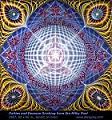
Pin d'Ar
Pindar is offline   Met citaat antwoorden
Oud 8 september 2006, 12:05   #354
exodus
Perm. Vertegenwoordiger VN
 
exodus's schermafbeelding
 
Geregistreerd: 7 mei 2004
Berichten: 13.621
Standaard

Citaat:
Oorspronkelijk geplaatst door genehunter Bekijk bericht
Je stelt dat al a priori. Je kunt toch hoegenaamd niet weten hoever de wetenschap staat binnen 200 jaar? Heel veel zaken die in het verleden onverklaarbaar verklaard werden, zijn intussentijd opgehelderd, door wetenschap.
De wetenschap van vandaag zou het ook al kunnen verklaren, als ze haar visie op de realiteit zou uitbreiden.

Citaat:
Donder en bliksem als de toorn der goden zijn vervangen door bijna dood ervaringen. So what? Je kunt je blijven wentelen in van die zielige redeneringen.
Ik heb er geen problemen mee met die visie, dat alles electriciteit is in de hersenen en dat het leven geen zin heeft. Ik heb er lange tijd in gelooft.

Ik houd me echter aan de feiten. En die wijzen onmiskenbaar aan dat er veel meer aan de realiteit is dan wat de maintream wetenschap zegt.

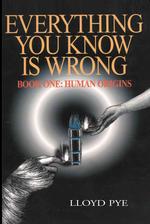
Hier enkele boeken (niet dat ik denk dat u ze ooit zal lezen maar ik geeft ze toch maar).


http://www.amazon.com/Holographic-Un...e=UTF8&s=books
Citaat:
"...There is evidence to suggest that our world and everything in it...are ...projections from a level of reality so beyond our own it is literally beyond both space and time."(Introduction p1)
.Talbot uses the theory developed by physicist Bohm in which he postulates an explicit order and an intricate order. The explicit is the world we see that is the hologram, which is projected from the intricate order, which is the mind.(or thought)(or spirit)
There is a brief discussion of holograms and theory and Talbot moves on to anecdotes.
In biology he notes that human memory is vaster than would be possible if it were stored as on film on the brains surface. It must be stored holgraphically. (p21) Similarly the evidence that the brain sees "out there" is an illusion. The brain cannot tell the difference between "out" there and its own process (eg "phantom limb" syndrome).
With respect to the role of mind in Medicine he quotes Siegal (author Love, Medicine and Miracles). Siegal sees this as a sign of tremendous hope,(p87) an indication that if one has the power to create sickness, one also has the power to create wellness.
And another quote from psychologist Keith Floyd. "Contrary to what everyone knows is so, it may not be the brain that produces consciousness, but rather consciousness that creates the appearance of the brain-matter,space,time and everything else we are pleased to interpret as the physical universe" (p160)
(In other words the brain is the effect of mind and not the cause!)

With respect to quantum physics he notes that small "particles" literally have no dimensions. (This would be consistent with say being a projection)


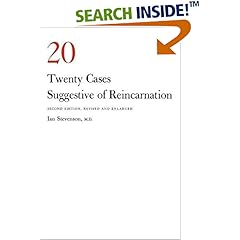
http://www.amazon.com/Twenty-Cases-S...e=UTF8&s=books

Citaat:
the book for the skeptic,

Well,well, well...no stars are enough for this book. It seems the word belief does not exist in Dr Stevenson's dictionary , and with clinical detachment, he has investigated each and every of the 20 cases. He has avoided philosophy and religion talk etc and does not have his own agenda which he his trying to promote. There are many books on reincarnation written by those who want to make a quick buck, or those promoting a particular religious thought or simply to become popular and appear on talk shows and then charge people (gullible) on an hourly basis. Dr Stevenson is not driven by any such factor. Reading his methodolgy, he has actually gone about the research as any skeptic would. He has not believed the case story and then looked for evidence that would support such a case story, he has looked for the evidence any skeptic would. The presentation of evidence gathered is fantastic showing the corroboration of each evidence. The best thing I liked about his research was that he actually attempts to rule out any fraud in each case story. Unbiased and honest. The use of the word "suggestive" speaks for his style used in the book throughout. He does not attempt to force any philosophical, religious thought down the reader's throat. You are free to make your own conclusions....and yes, it is DARN RIGHT CONVINCING !


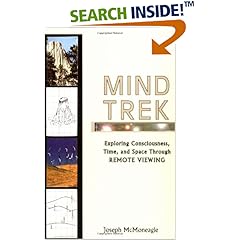
http://www.amazon.com/Mind-Trek-Expl...e=UTF8&s=books

Citaat:
I have read a lot on the subject of remote viewing, and until I read Joe's book I didn't think I was capable of actually doing it. The book has just the right balance of history, entertainment, and instruction to make you not want to put it down. Why spend thousands of dollars on instruction when everything you need is right here? Read it once, read it twice, then go out and do it! Only Joe has the integrity to sell you a book for under $15 postpaid when many are charging thousands for instruction that does not measure up to their claims.As a student of philosophy, this book changed the way I view reality. When your reality is shaken like that many people become vulnerable to cults, which for me would be a definite worry if I learned from an instructor, rather than a book. This is a powerful skill and such power is often abused when in the wrong hands. Proceed with caution and don't become a victim, get the book!


http://www.amazon.com/Life-After-Inv...e=UTF8&s=books
Citaat:
Moody is critical enough about what is going on that he makes a good investigator into the NDE phenomenon. There are too many flakes in the field and too many people aiming to crown themselves as spiritual gurus via their claim of having revelations during an NDE. Moody quite simply surveys people who have this experience and notes their similarities and differences. Then, he tries to put it into perspective - how might it be explained physically, psychologically, spiritually? What other phenomenon produce experiences that overlap with some of the ones reported in NDEs (e.g. high-gravity simulators)?

What I like most is that he just lays down the evidence without trying to overextend himself by speculating on what is really going on. The book is relatively short, but well-written and will keep your attention. I felt it fell a bit short of 5 starts for two reasons. First, he neglects to mention at all the negative NDEs or "Fear Death Experiences". How common the FDEs are is the subject of debate, but he does not even touch the topic.
__________________
Yesterday I was clever, so I wanted to change the world. Today I am wise, so I am changing myself. – Rumi
exodus is offline   Met citaat antwoorden
Oud 8 september 2006, 12:06   #355
Pindar
Banneling
 
 
Pindar's schermafbeelding
 
Geregistreerd: 1 juni 2005
Berichten: 8.258
Standaard

over titels? indirect hier:


Citaat:
Ik had een gerenomeerd wetenschapper gevraagd; met op z'n minst een paar serieuze publicaties,


of niet? Moeten ze nu wel een gerenomeerd wetenschapper zijn?? Dus met titels? of niet???????????????????????

En

Citaat:
je reactie spreekt boekdelen
zegt natuurlijk echt helemaal niets, nada

-> Exodus:

Pin d'Ar

Laatst gewijzigd door Pindar : 8 september 2006 om 12:08.
Pindar is offline   Met citaat antwoorden
Oud 8 september 2006, 12:09   #356
genehunter
Gouverneur
 
genehunter's schermafbeelding
 
Geregistreerd: 21 maart 2005
Berichten: 1.088
Standaard

Citaat:
psychologie en wis/natuurkunde
Wat een combinatie!

Zo gefrustreerd? 2xGeflest?

Citaat:
Dus met titels?
Publicaties zijn niet hetzelfde als titels hé slimmeke.

Citaat:
zegt natuurlijk echt helemaal niets, nada
Zielig gewoon zielig.

Laatst gewijzigd door genehunter : 8 september 2006 om 12:12.
genehunter is offline   Met citaat antwoorden
Oud 8 september 2006, 12:16   #357
Pindar
Banneling
 
 
Pindar's schermafbeelding
 
Geregistreerd: 1 juni 2005
Berichten: 8.258
Standaard

Citaat:
Oorspronkelijk geplaatst door genehunter Bekijk bericht
Wat een combinatie!

Zo gefrustreerd? 2xGeflest?


Publicaties zijn niet hetzelfde als titels hé slimmeke.


Zielig gewoon zielig.
Als DAT je enige argumenten, nou ja argumenten zijn, dan laat maar

Ik probeerde serieus te discussieren hier, mijn fout!


Pin d'Ar
Pindar is offline   Met citaat antwoorden
Oud 8 september 2006, 12:16   #358
Kaffer
Banneling
 
 
Kaffer's schermafbeelding
 
Geregistreerd: 3 september 2006
Locatie: Assenede
Berichten: 2.998
Standaard

Citaat:
Oorspronkelijk geplaatst door Apocalyps Bekijk bericht
Het is namelijk n�*et onomstotelijk bewezen, het is alleen de beste theorie die de werkelijkheid verklaart en daarom de meest waarschijnlijke verklaring.
Dat er nog steeds een hoop onbegrip is over de neo-Darwinistische evolutietheorie is mij hier wel duidelijk. Dat komt voornamelijk door onbegrip voor het wetenschappelijk bedrijf in het algemeen. Het is toch maar een theorie’ wordt er hier door sommige forumleden vaak gezegd, niet realiserend dat het een ‘wetenschappelijke theorie’ is en dat in de wetenschap het woord theorie niet hetzelfde betekend als een ‘onbewezen idee’. Een theorie verklaart waarnemingen uit verschillende disciplines en is meestal het bouwwerk van verschillende wetenschappers. Voor de evolutie theorie zijn dat waarnemeningen uit disciplines als: geologie, paleontologie, genetica, anatomie, ontogenie, fylogenie, taxonomie en ga zo maar door.... Een wetenschappelijke theorie staat in de wetenschap zo dicht bij het woord feit dat je het eigenlijk als waar moet aannemen tenzij je al die waarnemingen uit de verschillende disciplines beter verklaart dan de bestaande theorie. Dat haalt de ID/Crea ‘theorie’ bij 'LANGE' na niet. ID/Crea is alleen in staat om de gaten te stoppen met een verklaring die niets verklaart. De ID/Crea ‘theorie’ is alleen daarom al geen levensvatbare theorie daar het zo is dat de gaten in de evolutie theorie over tijd alleen maar kleiner zijn geworden. M.a.w, ID'ers/Crea's delven ( bewust/onbewust ) hun eigen graf (God).
Wetenschap betekent ook dat alle akademische hogescholen het met elkaar eens zijn .
Het valt op dat hoe langer hoe meer akademisch geschoolden afstand doen van de evolutietheorie .
Kaffer is offline   Met citaat antwoorden
Oud 8 september 2006, 12:24   #359
Amon_Re
Perm. Vertegenwoordiger VN
 
Amon_Re's schermafbeelding
 
Geregistreerd: 7 februari 2006
Berichten: 19.121
Standaard

Citaat:
Oorspronkelijk geplaatst door puud Bekijk bericht
Op http://www.freethinker.nl/forbid-arch3.htm staat die foto bij een kritische kommentaar op dat boek.
Thx
__________________
Citaat:
Oorspronkelijk geplaatst door lamenielachen Bekijk bericht
politiek België lijkt meer op een inktvis met veel grabbelende armen in de staatskas en inkt spuitend omdat niemand het zou zien.
Stephen F. Roberts: "...I contend that we are both atheists. I just believe in one fewer god than you do. When you understand why you dismiss all the other possible gods, you will understand why I dismiss yours."
Amon_Re is offline   Met citaat antwoorden
Oud 8 september 2006, 12:26   #360
Amon_Re
Perm. Vertegenwoordiger VN
 
Amon_Re's schermafbeelding
 
Geregistreerd: 7 februari 2006
Berichten: 19.121
Standaard

Citaat:
Oorspronkelijk geplaatst door exodus Bekijk bericht
Het mag nogal raar en riskant klinken, maar misschien wisten ze wel waaraan ze begonnen voordat ze geboren werden, om bepaalde lessen te leren. Zo'n levensbepalende ziekten zijn geen toeval.

Waarmee ik neit wil zeggen dat het hun eigen schuld is ofzo, of dat ze hun plan moeten trekken, integendeel.

Op een of andere manier zijn zij zelfs zeer moedig om aan zo'n zware taak te beginnen.
Dit is toch wel ronduit het meest idiote dat ik in weken hier gelezen heb, hoop dat je nooit geconfronteerd wordt met de realiteit.
__________________
Citaat:
Oorspronkelijk geplaatst door lamenielachen Bekijk bericht
politiek België lijkt meer op een inktvis met veel grabbelende armen in de staatskas en inkt spuitend omdat niemand het zou zien.
Stephen F. Roberts: "...I contend that we are both atheists. I just believe in one fewer god than you do. When you understand why you dismiss all the other possible gods, you will understand why I dismiss yours."
Amon_Re is offline   Met citaat antwoorden
Antwoord


Regels voor berichten
Je mag niet nieuwe discussies starten
Je mag niet reageren op berichten
Je mag niet bijlagen versturen
Je mag niet jouw berichten bewerken

vB-code is Aan
Smileys zijn Aan
[IMG]-code is Aan
HTML-code is Uit
Forumnavigatie


Alle tijden zijn GMT +1. Het is nu 21:12.


Forumsoftware: vBulletin®
Copyright ©2000 - 2026, Jelsoft Enterprises Ltd.
Content copyright ©2002 - 2020, Politics.be