Problemen met registreren of reageren op de berichten?
Een verloren wachtwoord?
Gelieve een mail te zenden naar [email protected] met vermelding van je gebruikersnaam.
|
Registreren kan je hier. Problemen met registreren of reageren op de berichten? Een verloren wachtwoord? Gelieve een mail te zenden naar [email protected] met vermelding van je gebruikersnaam. |
|
|||||||
| Registreer | FAQ | Forumreglement | Ledenlijst |
| Geschiedenis Van de Romeinen tot 9/11... |
 |
|
|
Discussietools |
 28 augustus 2009, 13:50
|
#301 | |
|
Gouverneur

Geregistreerd: 31 oktober 2006
Berichten: 1.286
|

Citaat:
|
|

|

|
|
29 augustus 2009, 13:49
|
#302 | |
|
Banneling
Geregistreerd: 15 april 2009
Berichten: 4.566
|
Citaat:
 [George IV, son of George III and Charlotte-Sophie of Mecklenburg-Strelitz, with a Moor, symbol of his blue blood]  [Queen Caroline of Brunswick, wife and niece of George IV, looking quite dark] Ook Wendels genoemd. Hoe zagen Germanen eruit? Het was wellicht eerder een combinatie van verschillende naties en mensentypen, waaronder ook zwarte en gekleurde, autochtone Europeanen. Charlotte Sophie's uiterlijk valt op omdat zij klassieke Afrikaanse trekken heeft en daarnaast ook als 'brown' en 'A true mulatto face' wordt beschreven. De toeschrijving vond vele eeuwen nadat de Vandalen optraden, plaats en hoeft dus niet letterlijk opgevat te worden. Zijn er nog Europeanen die zichzelf Kelt of Frank noemen? Een Mecklenburgse nationalist uit de achtiende eeuw, komt mij als donker voor. Maar ik houd het erop dat de hoge Mecklenburgse adellijke elite, net als die in de rest van Europa zwart en gekleurd was (1500-1789), en dat niet allemaal klassieke Afrikaanse trekken hadden, zoals Charlotte Sophie, maar niet voor witten doorgingen. Er is een portret van haar zoon George IV met een kleine, symbolische Moor, ten onrechte geidentificeerd als zijn bediende, maar welke verwijst naar zijn blauw bloed. Laatst gewijzigd door Egmond Codfried : 29 augustus 2009 om 13:56. |
|
|
|
|
|
29 augustus 2009, 14:44
|
#303 |
|
Banneling
Geregistreerd: 15 april 2009
Berichten: 4.566
|
Recently saw a movie; 'Coco Avant Chanel' and was taken aback there was not one black person on view. During her era there were plenty of blacks, no matter how you define them, around. A book mentions that at a early Chanel show her models wore slicked down hairstyles that brought Josehine Baker to mind. Even today blacks love Chanel fashions and cosmetics. Would not all this merit inclusion of one black or coloured person?
++++ What would the world be like without black PEOPLE? Best Answer - Chosen by Voters Considering we are ALL descendent from earlier humans in Africa (probably black), without them none of us would exist. Block User What would the world be like without black people? Watch just about any movie from the inception of film till roughly the late Sixties. Or television. Pick up any magazine from this era, look at the advertisements. There's your black-free world. Even some modern movies depicting that era do the same thing,"Tucker", "Pleasantville" ..."A Beautiful Mind". Some modern directors depicting present day times don't even like putting blacks in their movies. It almost seems to be an American tradition. Why? Do you envision this as some kind of utopian scenario? Block User Hmmm. Tough question. I think that without ANY race, there would be good things, and bad things. Without black people I think there would be less poverty in the southern part of the US (I mean no offence to black people. with all due respect, I am only referring to the poverty that is the effect of slavery). Also without black people, there would probably be less...how should I say it...."down to earth" people. Black people have an enormous sense of loyalty and respect to those that have earned their respect. I think that Black people are just like any other race: they offer their negative qualities, and their many positive qualities. Block User Umm well there would be no amazing people like MJ and Will Smith and many, many more.. James Brown was amazing and thank god I saw his concert a few years ago in S. Korea... Colour is a wonderful thing.. I am as white as can be.. my partner is yellow.. so I say it would be a very boring world without black. =) And the reason i believe that crime is higher in black is not about colour but how society treats coloured culture. Same as in Australia... Block User it wouldn’t bee the same because all the things that blacks created wouldn’t exist like various types of music, food, clothing and sports...just the same if any other ethnic or race, If there was no white people there probably wouldn’t be a united states, if there were no Japanese there would be no anime and play station  Block User A clearer place with less crimes, stability, and peace. Of course that would have to include killing all bad guys anyway, black or white. But (no offence) black people are more likely to cause crimes...because of where they come from. Source(s): Just stating my opinion, don't get your knickers in a twist! Block User The world would be empty of humans, When we evolved, we evolved as black people, different climate evolved different skin Block User It wouldn't be different. It'd be exactly the same; people would just find a new way to discriminate. Block User Dull it must be a loss!!!!Black people, white people, red......yellow and others are all the same - HUMAN. All of them are part of the world. Block User Are you serious??? This is a joke, right?!?! This question doesn't even warrant an educated answer. So rhetorical! WOW!!! Block User Out of place, without every race in the world the world wouldn't be the same. Why did you ask this? Block User Move to either Iceland or Lithuania to find out. Block User Boring. This world needs diversity, and people to EMBRACE it!!! Love you guys. <3 Block User We wouldn't have modern American music. And basketball hoops would have to be about two feet shorter than they are now. Block User No soul food hip hop R&B reggae Michael Jackson Obama Beyonce Rihanna Chris brown Oprah!. etc it would be dull Block User Well, there wouldn’t be any rap. YES Block User Crap, I wouldn’t have a brother (Am White) |
|
|
|
|
30 augustus 2009, 14:57
|
#304 | |
|
Staatssecretaris

Geregistreerd: 15 december 2006
Locatie: Vlaanderen
Berichten: 2.776
|
Citaat:

__________________
|
|
|
|
|
|
31 augustus 2009, 09:18
|
#305 |
|
Banneling
Geregistreerd: 15 april 2009
Berichten: 4.566
|
Bronnen van zwarte en gekleurde Europeanen
De meeste mensen willen meepraten, maar niet eerst 15 pagina's doornemen. Dus post ik deze bron van 'blauwe mannen' in de middeleeuwen opnieuw. Er waren altijd zwarten in Europa. Met de komst van de Grimaldi Mens, door de Winkler Prins Encyclopedie beschreven als 'Negride' waren zwarten ook de allereerste Europeanen. De enige verklaring voor zwarten na de Middeleeuwen is dat zij door bewuste endogamie, geografische isolatie en superioriteits overwegingen hun kleur tot ver in de negentiende eeuw behielden. ++++++++++++++++++++++++++++++++++++++++++++++++++ +++++++ Were there ever any black Vikings? There were trade routes between Northern Europe and Africa, India and China, so it is very likely that people from all over the world would have visited Scotland. It is also likely that some Northern Europeans would have settled in other parts of the world and some people from Africa, India and other areas would have settled in Northern Europe. Direct evidence of this is rather hard to find, however. There's a complication in translations of medieval records because a description of someone as "a black man" was used to mean someone with black hair, not black skin. Norse sagas describe Africans as "Blaumenn" (blue men). There are stories of Blaumenn in Dublin and of someone called Kenneth of Niger in Scotland in the 10th Century. http://www.lothene.demon.co.uk/faq.html#question11 In the middle ages Muslims were considered as bad or even worse than heathens, because they worshipped Muhammad, who was an Antichrist to Christians. There are not many episodes in Heimskringla that concern Muslims, or ‘blámenn’ as they are called in the sagas. King Sigurd Jorsalafar is said to have fought heathens in Spain on his way to Jerusalem. He plundered with his crew on the island of Formentera, where there was a ‘herr mikill heiðinna blámanna’. Sigurd’s men win the battle of course (Msona chs. V-VI). Heimskringla does not mention anything about Muslim beliefs, but obviously there was no need to clarify the evilness of the blámenn to the audience since the word ‘blár’ reveals that these men were very different from the heroic King Sigurd and his men. Even though blár means ‘blue,’ in this case it signifies ‘black.’ These ‘blue men’ lived in Spain or the south Mediterranean. ‘Blámenn’ refers not only to literally black men, but also to Arabs and Moors. The use of the term ‘blámenn’ indicates that the writer wanted to stress that they were of different ethnic origin than the Norse people. We should also remember, too, that in the fornaldarsögur the term ‘blámenn’ refers to earthly creatures of evil (e.g. ‘blámenn ok berserkir’ Lindow, 1995, 13-14). This ethnic implication was probably more important to the intended audience of the saga than any, rightly omitted, information about the religious beliefs of the blámenn. http://www.dur.ac.uk/medieval.www/sagaconf/aalto.htm Frances 488. Tue Oct 21, 2003 10:26 pm I'm sure I read that black men were called 'blue men' by the Vikings. Also that some African tribes have no separate words for blue and green, as the differentiation is of no importance in their necessary world-view. However, they can readily recognise the difference when it's pointed out to them. The same as we don't have four hundred words for different aspects of camels, as I'm told Arabs do, only in reverse. If you see what I mean. ---------------------------------------------------------------------------------------------------------- In Magnúss sona saga (ch. 6) King Sigurd makes a journey to the Holy Land. On his way he fights with the “heathen blámenn” on the Spanish Isles of Menorca and Ibiza. These socalled “blue men” in the saga are Moors. The word blár means here ‘black’ and blámenn referred to the inhabitants of Blálönd – Black Lands, which was an undefined, faraway geographical area in the minds of the learned medieval Scandinavians. As the word itself reveals, it was the black skin that mattered. In the fornaldarsögur blámenn were associated with forces of evil. Nevertheless, blámenn referred later not only to black men but also to Moors and Saracens. So, here we have the thin line between the supernatural and ethnically different enemies, which is by no means a deviating feature in the Heimskringla (or in other Old Norse sources).22 As the giants of the Old Norse mythology became the Finnar in historical writings, so did the blámenn of the fornaldarsögur become the enemies of Christianity: black men, Saracens, Moors. As John Lindow has pointed out, it must have been difficult to draw a line between the supernatural and the natural in these contexts. Lindow has also observed that what is striking about the description of strangers and other groups in Nordic tradition are “how closely they resemble attributes of supernatural Ennen ja nyt 4/2004 >>> http://www.ennenjanyt.net/404/ referee/aalto.pdf 7 beings”.23 In fact, in the Middle Ages there hardly existed a division between the supernatural and the natural. In people’s minds angels were as real as demons. It is obvious that in the Middle Ages Icelanders and Norwegians must have had a faint understanding of faroff places that they knew only by name: Spain, Sicily, Jerusalem, Byzantium. But it seems that the geographical distance had less importance than religion when regarding the “otherness” of people. Namely, the Christian concept of the world was that it consisted of Christian peoples. Heathens and heretics did not belong to their world: they were outside of Christendom. It seems that this Christian worldview is perceptible also in the Heimskringla, as strangers are those who stand outside the Christian community. These outsiders are described as extremely different. “Otherness” based on ethnic difference does not seem to play a major part in the Heimskringla. In the case of blámenn it is obvious that skin colour that differed from the standard is one factor that makes them different, but I would see the skin colour only as a feature that emphasises that blámenn were evil and enemies of Christianity as were also the Wends. All in all, heathens in the Heimskringla seem to be strangers without any category, which would mean that their degree of difference is digital. The True root of Hoy by Blue Man on 27.2.2004 Those mired in the constraints of the modern world, would be hard pressed to allow themselves to believe the truth of the origins of this sacred word- Hoi Hoy, which is most generally spelled Hoi, has a root far earlier than most understand. It has become a greeting associated with those who know the TRUTH of the origins of Man. Ahhh, he must be crazy you say?!. The Hoi greeting is most often traced to seafaring civilizations, who had significant contact with the mammals of the sea. The Hoi Hoi sound is that made by porpoises to communiate (greet) each other. Over time this sound was adopted by Vikings, Scotsman, Polynesians, Islanders, etc. as a Universal Greeting. When the legendary Blue Men (Hoi Gollokai) (Mermaid like creatures- with wizardlike powers of song, luck, art, and creativity)) due to their higher consciousness (like dolphins) left the oceans to return to land, thus beginning their interaction and intermingling with early humans (Cro Magnon). This eventual interbreeding led to lineages far more intelligent with a higher consciousness than existed before. These lineages can be traced to several ancient civilizations, most notably in Scotland and Ireland, where the Galukai came out of the brakish waters of the Lochs. Ancient Scottish castles on the Lochs (, bear some as yet unknown signifiance in this history. Mummified remains of these ancient sea creatures can be found in some museums. I have seen them. "The Luck O the Irish", has a basis in fact, for the redheaded descendants of the Golokai, who came from the sea, eventually mating with humans. If you analyze photography of bluemen, colors, similar to dolphins, and convert them to negatives you get bluegreen. Irish/Scottish redheads, seen in the negative (as in the sea), appear this exact color- bluemen. There also exists other strains of these breedings who came from the polynesian and island peoples. These peoples, some alive today, possibly with the surname Hoy or Hoi, possess qualities of lucidity, creativity, higher consciousness, sensitivity to sound, generally very musical, or artisitic, have a special affinity for the water, and seem to age slowly. Even the Hopi Indians of the SouthWest, who arose from remnants of the Mayans, who knew these secrets, have as one of their deities- The Red Beard LongHair. Shown as a Kachina- he is the spirit who brings the water and rain to the land. Sound farfetched ? I have done my research. New clues from the underwater lost city off the coast of Cuba that has been found, as well as pyramid anomolies in the OceanPacific due West of Oregon/California coast should prove interesting.... Stay tuned. Hoi Hoi has become the international greeting for those with the higher consciousness, yet who stay in the shadows. There may also be a link with sacred Orders such as the FreeMasons... who came from this Old World- New Order.... There are other very interesting parallels, that I don't have time to discuss, relating to a self-perpetuating semantic phenomenon. The The. strange and interesting comparisons to the mathematics of Fractal Chaos theory, and the iterations of equations that create a "Mandelbrot Set" formation... Truth is Stranger than Fiction !! Hoi Hoi !! Long live the Porpoise People ! P.S. The word porpoise comes from Porcus (Pig) + Piscis (Fish)= PigFish... mammal interbred with fish.... sounded with the oi sound that the dolphin makes. Ignorant humanoids descended from simians... enlightened Man descended from sea creatures that returned to the sea after having lived on land, and then rebred with existing mammalian humanoids... BELIEVE... Hoi Hoi !! Some believe in aliens from outer space.... but here on earth is the evidence of the truth from our own oceans !!! Their little lecture concerning the relationship between grapheme and phoneme in the Greek and Russian alphabets is hardly more trustworthy. Per says: “We must remember that in both the Greek and Russian alphabets the letters “b” and “v” are identical, and so are “o” and “u”…” (p. 137 our translation). Obviously, they have not understood that one letter can symbolize different sounds in the same or related alphabets. The Russians and the modern Greeks distinguish between b and v and between o and u in both speech and spelling; a fact which the first lesson in any textbook on these languages would have revealed. Even when it comes to Snorri’s own language, the two authors are surprisingly ignorant. When discussing the meaning and location of Bláland (The Blue Land, i.e. the Land of the Blue Men) (pp. 29), they fail to acknowledge that the adjective blár in Old Norse may also mean dark. Their discussions around the meaning of the place-name Svitjod (Old Norse Sv�*fljó›) also end in a total shambles when they introduce a pseudo-Norse explanation which is grammatically impossible (p. 30). http://www.hf.uib.no/i/Nordisk/Maalo...yerdahl-v1.pdf Three key questions arise at this point: What did the very first Norse travelers to North America in fact call the people they met there, well over a century before Ari the Learned penned his history? Did the reference to "Skrælings" occur in the first version of Ari's work, the original of which no longer exists? And what was the word Skræling(j)ar intended to signify?18 18 As handed down through the pertinent medieval literature, the word Skræling(j)ar deliberately conveys small size as the chief characteristic of the native people the Norse met on their voyages farthest west. (From innumerable examples, we know that the names the medieval Norse gave to new people and places were based on what they considered a main characteristic.19) There is also fairly good scholarly agreement that in a literary context, Skræling(j)ar was used pejoratively to indicate puny physical stature—a quality disdained by the medieval Norse. While the word therefore suggests a possible etymological link to the modern Norwegian word skral, used about people or objects in poor condition,20 that linkage is not readily acceptable to linguistic scholars. However, the philologist Kari Ellen Gade proposes that if the word skræling(j)ar was coined orally shortly before its first-time written use in Ari's book, the commonly accepted rules for vowel changes and consonant doubling in Old Norse might not apply.21 19 Examples are the names Leif Eiriksson gave to the three main North American regions he found, and the term blámenn ("blue men") applied to the black people the Norse encountered in North Africa. http://www.historycooperative.org/cg....1/seaver.html http://omacl.org/Heimskringla/ynglinga.html JSTOR: Royal Purple of Tyre- [ Vertaal deze pagina ]Negroids and some "Moors" were called "blue-men" in early Irish-Norse Chronicles.36 ..... Purple in the Middle Ages was used for sacred and royal purposes ... links.jstor.org/sici?sici=0022-2968(196304)22%3A2%3C104%3ARPOT%3E2.0.CO%3B2-U - Gelijkwaardige pagina's Etymology and definitions BlueberriesThe modern English word blue comes from the Middle English, bleu or blwe, which came from an Old French word bleu of Germanic origin (Frankish or possibly Old High German blao, "shining"). Bleu replaced Old English blaw. The root of these variations was the Proto-Germanic blæwaz, which was also the root of the Old Norse word bla and the modern Icelandic blár, and the Scandinavian word blå, but it can refer to other colours. A Scots and Scottish English word for "blue-grey" is blae, from the Middle English bla ("dark blue," from the Old English blæd). Ancient Greek lacked a word for colour blue and Homer called the colour of the sea "wine dark", except that the word kyanos (cyan) was used for dark blue enamel. As a curiosity, blue is thought to be cognate with blond, blank and black through the Germanic word. Through a Proto-Indo-European root, it is also linked with Latin flavus ("yellow"; see flavescent and flavine), with Greek phalos (white), French blanc (white, blank) (loaned from Old Frankish), and with Russian белый, belyi ("white," see beluga), and Welsh blawr (grey) all of which derive (according to the American Heritage Dictionary) from the Proto-Indo-European root *bhel- meaning "to shine, flash or burn", (more specifically the word bhle-was, which meant light coloured, blue, blond, or yellow), whence came the names of various bright colours, and that of colour black from a derivation meaning "burnt" (other words derived from the root *bhel- include bleach, bleak, blind, blink, blank, blush, blaze, flame, fulminate, flagrant and phlegm). In the English language, blue may refer to the feeling of sadness. "He was feeling blue". This is because blue was related to rain, or storms, and in Greek mythology, the god Zeus would make rain when he was sad (crying), and a storm when he was angry. Kyanos was a name used in Ancient Greek to refer to dark blue tile (in English it means blue-green or cyan).[3] The phrase "feeling blue" is linked also to a custom among many old deepwater sailing ships. If the ship lost the captain or any of the officers during its voyage, she would fly blue flags and have a blue band painted along her entire hull when returning to home port. [4] Many languages do not have separate terms for blue and or green, instead using a cover term for both (when the issue is discussed in linguistics, this cover term is sometimes called grue in English). Blue is commonly used on internet browsers to colour a link that has not been clicked; when a link has been clicked it changes yellow or orange or purple. |
|
|
|
|
31 augustus 2009, 09:43
|
#306 | |
|
Gouverneur
Geregistreerd: 31 oktober 2006
Berichten: 1.286
|
Citaat:
Bovendien zou het niet zo zijn dat indien inderdaad de dael "zwart" was, vele mensen dit zouden willen benaderen? (sosciologsch gegeven de hogere op de sociale ladder imiteren) en wat zien we in de tijd van George? Iedereen wilde zo blank, wit mogelijk zijn? Uw stelling is gebaseerd op alleenstaande portretten en verklaringen die vaak nog eens worden tegengesproken. Zeker wat Caroline van Bruswick betreft. Bovendien als heel de adel zwart zou zijn geweest was dit zo evident dat het waarschijnlijk niet eens werd vermeld. Het feit dat men dit expliciet beschrijft toont al aan dat het om een buitenbeentje gaat. |
|
|
|
|
|
31 augustus 2009, 10:14
|
#307 | |
|
Banneling
Geregistreerd: 15 april 2009
Berichten: 4.566
|
Citaat:
 [The Adoration of the Magi Artist: Da Ponte Jacopo Museum: National Gallery of Scotland (Edinburgh) Epoch: Mannerism Country: Italy] [Adoration scene met de zwarte koning Balthazar in een centrale rol.] 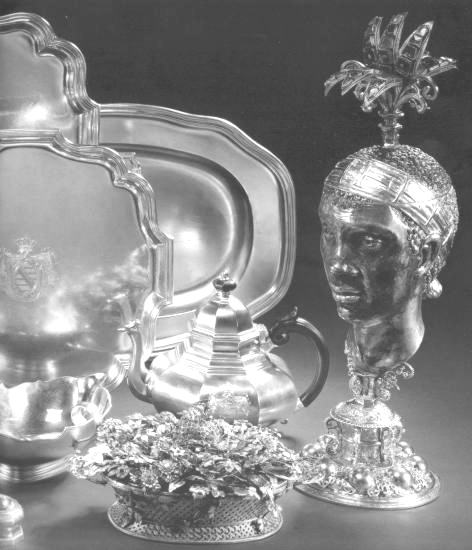 [Deel van de Moritzburg Schat (Renaissance) met een goud en zilveren bokaal in de vorm van een Morenkop, welke bij hoogadellijke huwelijken werd gebruikt. Waarom een Morenkop? De Moor stond blijkbaar in hoog aanzien.] Beste, Mijn stelling is NIET gebaseerd op portretten, maar op PERSOONSBESCHRIJVINGEN. Indien één persoon als zwart en gekleurd is geidentificeerd kan men ook conclusies verbinden aan het uiterlijk van diens ouders en nakomelingen. Verder heb ik hier bronnen afgedrukt die aangeven dat er altijd zwarte en gekleurde mensen in Europa aanwezig waren. De elite schreef voor de elite, en een zwart en gekleurd uiterlijk was blijkbaar een normaal kenmerk van de elite, dus verdiende geen aparte vermelding. Misschien dat een zwartere huid of meer klassieke Afrikaanse trekken als een belangrijke distinctie werden gezien. Barone Belle van Zuylen (1740-1805)schrijft dat zij 'niet de witte handen heeft' en was wellicht, op basis van een andere persoonsbeschrijving, licht van kleur. Het valt dan op dat twee van haar minnaars; D'Hermenches heel donker oogt op een portretje op Slot Zuylen en dat haar andere minnaar, zijn neefje, Benjamin Constant wordt beschreven als 'very bad complexion.' Wat niet staat voor pokdalig of een huidziekte, maar een eufemisme is voor een zwarte huid. In de negentiende eeuw, na de gewelddadige Franse Revolutie (1789-1795) wanneer de adel in vele landen is afgeschaft, schrijft men vaak in negatieve termen over de zwarte kleur. Dit volgt op 'Wetenschappelijk Racisme' welke ik definier als een overdreven bevrijdingsideologie om Europe te bevrijden van een zwarte, despotische en wrede adel en monarchie. Uw stelling dat 'iedereen wit wilde zijn' is kennelijk niet gebaseerd op onderzoek. Maar om wit te willen zijn moet je eerst 'niet-wit' zijn. Waarom waren deze mensen dan 'niet-wit' en waarom was kleur opeens zo een grote issue? De literatuur wijst uit dat er nog steeds weinig onderzoek naar de adel is gedaan. Ik ga ervanuit dat hun kleur het grootste stuikelblok is, mede omdat zij hun superioriteit baseerden op hun kleur en later, bewust, witte nakomelingen fokten, bij gebrek aan een betere term. De Moor heb ik tot symbool van Blauw bloed (1500-1789) verklaard na jarenlange bestudering van de vele soorten Moren in de westerse kunst waarvoor er geen andere, meer acceptabele verklaring bestaat. Verder heb ik mij verdiept in eurocentrische studies die de vele afrocentrische afbeeldingen van de Heilige Mauritius, afkomstig uit Egypte/Thebe, onderzoeken en de zwarte koning Balthasar die vanaf 1200-1300 de geboortescenes van Jezus domineert. Beide werden afgebeeld als Moren, pikzwarte klassieke Afrikanen. Men komt in deze boeken echter tot verkeerde conclusies vanwege geindoctrineerdheid door de 'witte suprematie' gedachte. Dus dat elke witte, op basis van zijn witte huid en kleine gezichtshoek biologisch en intellectueel superieur is aan elke zwarte. Of dat witten de dragers van de beschaving zouden zijn. Het vereist enige hersenkracht om te zien hoe uiterst belachelijk dit klinkt, vooral als wij weten dat de beschaving niet eens in Europa begon. Laatst gewijzigd door Egmond Codfried : 31 augustus 2009 om 10:27. |
|
|
|
|
|
31 augustus 2009, 10:45
|
#308 | |
|
Gouverneur
Geregistreerd: 31 oktober 2006
Berichten: 1.286
|
Citaat:
De drang naar wit zijn is echter uitgebreid beschreven in historische bronnen. Het was een mode verschijnsel. Waar haalt U het idee dat de adel in vele landen is afgeschaft na de Franse revolutie? Zelfs in frankrijk bleef de adel, weliswaar uitgedund, voortbestaan na de revolutie met vooraanstaande posities. Kijk maar naar bv Talleyrand. U haalt alleenstaande persoonsbeschrijvingen aan die vaak worden tegengesproken door andere bronnen zie Carloline. Er is geen afdoende verklaring waarom andere portretten uit dezelfde periode geen zwarte kenmerken vertonen. De verwijzing naar de zwarte koning uit het Jezusverhaal is weinig relevant mbt de Europese adel. Over de term Moor is er al een uiteenzetting hierboven. Uw stelling is niet behoorlijk onderbouwd, minstens is er onvoldoende historisch/wetenschappelijk/eventueel biologisch bewijs. |
|
|
|
|
|
31 augustus 2009, 12:01
|
#309 | |
|
Banneling
Geregistreerd: 15 april 2009
Berichten: 4.566
|
Citaat:
 [Maria Jacoba van Goor (1687-1737), de regentenoma van barones Belle van Zuylen] 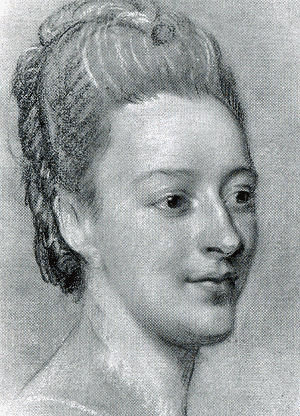 [Belle van Zuylen (1739-1805) beschrijft zichzelf als ‘ze heeft niet de witte handen’ wat ik in dit kader lees als een bevestiging dat zij niet-wit is, hoewel zij, anders dan haar grootmoeder, geen klassieke Afrikaanse trekken vertoont. Opvallend is dat wij nooit haar zus te zien krijgen. Zij, noch oma Maria Jacoba van Goor zijn te zien op Museum Slot Zuylen. De moeder van Maria Jacoba van Goor was een nicht van de schilder Rembrandt] U zet de zaken op zijn kop: degene die geen bronnen plaatst bent u, terwijl u niet ingaat op mijn bronnen. Voor een forensich onderzoek gebruikt men alle aanwijzingen. Fysieke aanwijzingen, maar ook deductie uit geschreven bronnen. Gaarne verneem ik welke bronnen melding maken van wit maken als modeverschijnsel. En leg aan mij uit waarom mensen die al wit zijn, zich wit zouden moeten maken. Het lood en arseen in de witte make-up hadden mijn inzien een blekende werking, welke de gekleurde huid moest tegengaan. Net als de hoeden, handschoenen en gezichtssluiers. Het is algemeen bekend dat de Franse Revolutie gepaard ging met de afschaffing van adellijke titels. Na restauratie werden ze weer ingevoerd. De afbeeldingen van de Adoratie zijn Europese kunstwerken, door Europese schilders (Dürer, Rubens) voor Europees gebruik. Waarom had men in Europa, vanaf het jaar 1200-1300 behoefte aan taferelen met de beeltenis van een centraal geplaatste Moor/koning? Wij hebben te maken met een selectie van portretten. Enkele schrijvers geven aan dat veel materiaal rond de Franse revolutie werd vernietigd, zoals de zwarte Madonna van Du Puy. Ook in de Patriottentijd werden in Nederland veel zaken met betrekking tot de adel vernietigd. De afbeeldingen van Moren, sieraden, kostbare gebruiksvoorwerpen, heraldische wapens, verwerking van het woord Moor in familienamen, portretten met een Moortje zijn allemaal symbolische verwijzingen naar de status van personen. De adellijke status was zeer bepalend en dus ook hetgene waar men zich in de eerste plaats op liet voorstaan. Met één blik wist men dat men met een adellijke persoon te maken had. De persoonsbeschrijvingen treft men in wetenschappelijke biografien of autobiografische stukken en vinden vaak ondersteuning in de gegraveerde portretten. Deze beschrijvingen gaan verder dan alleen 'zwart haar.' Ik stel mij zo voor dat u één van die soort mensen bent die alleen iets kan accepteren als de tv of de regering daarvan gewag maakt. Zoals de kernwapens in Irak, of dat 9/11 het werk is van Al Qaida, of dat Jezus geboren werd uit een magd bezwangerd door god! Met zulke mensen valt niet te discussieren omdat zij niet geleerd hebben om hun eigen hoofd te gebruiken. Laatst gewijzigd door Egmond Codfried : 31 augustus 2009 om 12:10. |
|
|
|
|
|
31 augustus 2009, 14:56
|
#310 | |
|
Gouverneur
Geregistreerd: 31 oktober 2006
Berichten: 1.286
|
Citaat:
Om nog witter te zijn, gebruindheid was een kenmerk van de werkende klasse en dus lagere klasse zoals U weet... Het afschaffen van adelijke titels is niet hetzelfde als het afschaffen van de adel en dan nog maar enkel in gebeieden bezet door de franse revolutionairen, U holt zich zelf weer voorbij. Uw onderzoek kenmerkt zich eigenlijk in uw eerste alinea :"wat ik lees als een bevestiging dat zij niet wit is." U leest wat U wil lezen, verklaart het voor waar en schuift al de rest opzij. Dit doet nog steeds geen afbreuk aan mijn stelling in de vorige posts. U mag mij zich voorstellen zoals U wil. Een waanvoorstelling speelt zich ook af in het hoofd, U gebruikt het maar of het goed is? |
|
|
|
|
|
31 augustus 2009, 15:52
|
#311 | |
|
Banneling
Geregistreerd: 15 april 2009
Berichten: 4.566
|
Citaat:
Het afschaffen van adellijke titels is het afschaffen van adellijke privileges. Mensen kunnen zich binnenkamers nog voor baron zus of graaf zo uitgeven, maar de adelstand is onwettig. Iedereen was burger. Napoleon herintroduceerde de adel. Hoe leg je aan een fanatieke Muslim uit dat Joden ook mensen zijn, of aan Fanatieke Joden dat Muslims ook mensen zijn. Blijkbaar zijn Europeanen zo geindoctrineerd door hun meesters dat alles wat afwijkt van wat hen is ingestampt wel een leugen moet zijn. Dat er geen zwarten in Europa waren is een soort geloofsartikel geworden. Als je mensen kan laten geloven dat een maagd zwanger kan worden en een god baren, dan kan je ze alles wijsmaken. Het vreemde is dat men in wetenschappelijke werken duidelijk zwarte afbeeldingen omzeilt of ze anders heel klein afdrukt of slechts een detail zodat men de zwarte figuren niet hoeft te tonen. Het Huygensmuseum die Maurits Huygens, geschilderd door Rembrandt niet toont. Allemaal kleine aanwijzingen dat een deel van de wetenschappelijke elite weet waar ik het over heb. Over het algemeen geloof ik dat hoe meer een Europeaan gestudeerd heeft hoe racistischer hij klinkt, want hij is immers meer geschoold in staatsracisme. Men heeft namelijk een ideologie nodig om over de hele wereld zwarte en gekleurde mensen te onderdrukken, uit te buiten en te vermoorden. Staatsracisme komt ook tot uiting in het tonen van valse, verwitte portretten, maar ook in het opzetten van anti-discriminatie bureau's waar men in feite bij de duivel te biecht gaat. Deze bureau's waar soms zelf zwarten werken zijn niet bedoeld om staatsracisme tegen te gaan, maar om informatie te verzamelen voor beleidsplannen en evaluatie voor staatsracisme. Overigens begin ik te geloven dat mensen, waar het de aantasting van hun privileges betreft, geen vinger zullen uitsteken om de waarheid aan het licht te brengen. Dus zullen het de groepen zijn die belang hebben bij het bekend worden van de waarheid, namelijk dat racisme ontstond toen Europa zich bevrijde van zwarte overheersing, die zich inzetten om dit wereldkundig te maken. Laatst gewijzigd door Egmond Codfried : 31 augustus 2009 om 15:55. |
|
|
|
|
|
31 augustus 2009, 16:19
|
#312 | |
|
Banneling
Geregistreerd: 15 april 2009
Berichten: 4.566
|
 Maria van Schotland (1542-1587), de overgrootmoeder van Charles II Stuart, The Black Boy en de nicht van Elizabeth I. Citaat:
|
|
|
|
|
|
31 augustus 2009, 16:19
|
#313 |
|
Banneling
Geregistreerd: 15 april 2009
Berichten: 4.566
|
zwart  wit Laatst gewijzigd door Egmond Codfried : 31 augustus 2009 om 16:20. |
|
|
|
|
31 augustus 2009, 16:24
|
#314 | |
|
Banneling
Geregistreerd: 15 april 2009
Berichten: 4.566
|
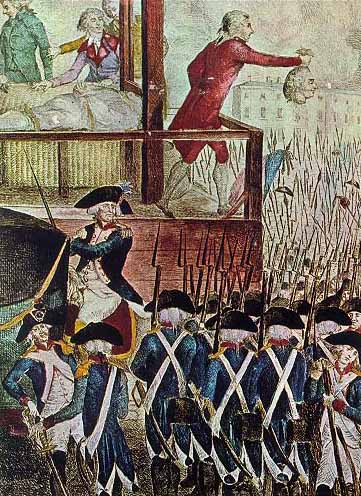 [De onthoofding van Lodewijck XVI] 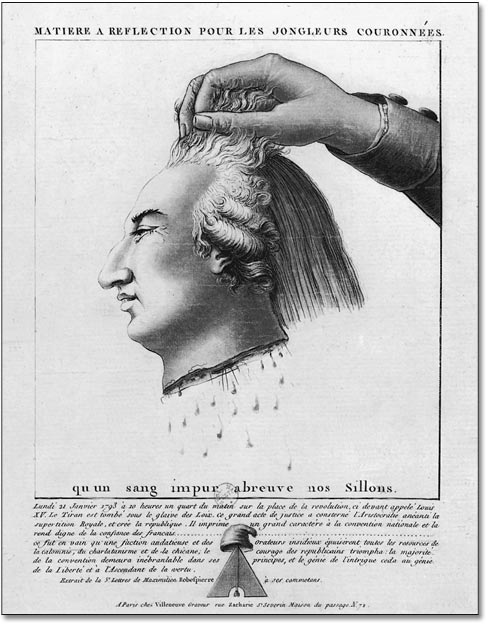 [Zodat men het beter kan zien!] Citaat:
Laatst gewijzigd door Egmond Codfried : 31 augustus 2009 om 16:25. |
|
|
|
|
|
31 augustus 2009, 16:41
|
#315 |
|
Banneling
Geregistreerd: 15 april 2009
Berichten: 4.566
|
 [Schilder Liotard, zelfportret, half-gewit]  [Portrait of a young woman] 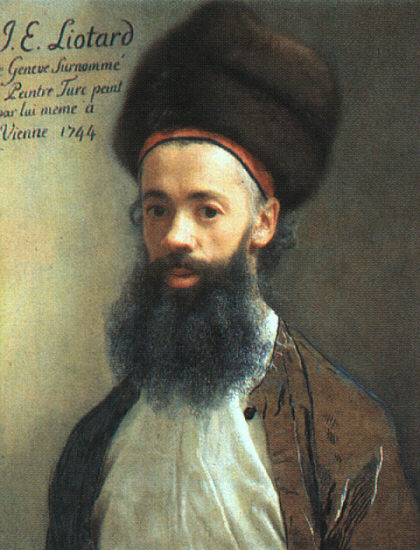  [Selfportraits by Liotard] Laatst gewijzigd door Egmond Codfried : 31 augustus 2009 om 16:55. |
|
|
|
|
31 augustus 2009, 20:25
|
#316 | |
|
Banneling
Geregistreerd: 26 augustus 2009
Berichten: 974
|
Citaat:
|
|
|
|
|
|
1 september 2009, 02:08
|
#317 |
|
Staatssecretaris
Geregistreerd: 15 december 2006
Locatie: Vlaanderen
Berichten: 2.776
|
Zwarte, ze zitten overal. Vermomt als blanken. En in het jaar 2010 nemen ze de wereld over. Obama is maar een van hun vele pionnen. Samen me Nelson Mandela zal hij de zwarte revolutie leiden. En ik heb voor deze beschuldigingen ook bewijzen
 Nu denk je. Dat zijn gewoon 2 foto's. Maar niets is minder waar. Het is HET bewijs dat Obama en Mandela broers zijn. De gelijkenissen zijn treffend. beide krullend haar, donkere huid, brede neus, redelijk dikke lippen. Als je mij nu nog niet gelooft bekijk de volgende foto's dan eens  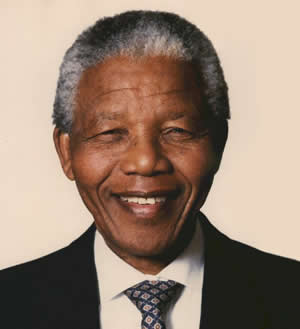
__________________
|
|
|
|
|
1 september 2009, 07:42
|
#318 | |
|
Partijlid
Geregistreerd: 30 juni 2009
Berichten: 262
|
Citaat:
__________________
Political power grows out of the barrel of a gun -Mao Zedong- |
|
|
|
|
|
1 september 2009, 09:56
|
#319 | |||
|
Banneling
Geregistreerd: 15 april 2009
Berichten: 4.566
|
Citaat:
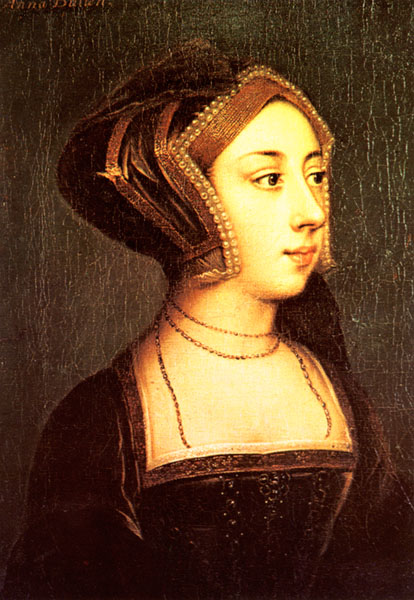
De Blue Blood is Black Blood (1500-1789) theorie is gebaseerd op persoonlijke beschrijvingen als deze van Queen Anna Boleyn, de moeder van Queen Elizabeth. Als iemand als ‘very dark’ wordt beschreven, verwacht men ook een very dark portret. Als men echter een verwit portret aantreft wil de intelligente onderzoeker weten waarom een als ‘very dark’ beschreven persoon als witte werd afgebeeld. Kan het nog simpeler gebracht worden? Citaat:
ANNA BOLEYN’S APPEARANCE Citaat:
|
|||
|
|
|
|
1 september 2009, 09:57
|
#320 | |
|
Banneling
Geregistreerd: 15 april 2009
Berichten: 4.566
|
Citaat:
 Laatst gewijzigd door Egmond Codfried : 1 september 2009 om 09:59. |
|
|
|
|
|
|
|